infectious disease
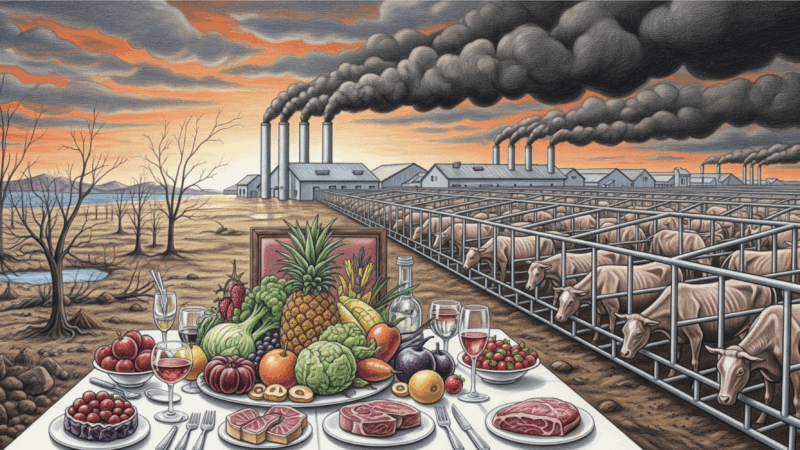
How Your Plate Affects Your Planet
Humanity’s growing demand for animal meat is driving a planetary crisis, accelerating climate change, devastating ecosystems, and threatening public health.
Two grim, almost surreal, 26-story buildings tower over the southern outskirts of Enzhou, about 500 miles west of Shanghai in China’s Hubei province. No one would mistake them for apartment complexes despite their neat grid of window-like slots. Indeed, their main inhabitants are not human at all. The buildings are designed specifically to meet the biological and reproductive needs of 600,000 pigs each. Here they will be bred, farrowed, fattened, and finally slaughtered to meet the exploding animal protein needs of China, which consumes half the world’s pork and is also its biggest pork producer.
It is the world’s largest vertical pig farm, designed to manufacture 54,000 tonnes of pork every year. The building’s design reflects its unique function. Each of its six giant elevators can hoist a load of 10 tons, or about 100 pigs, at a time. Every utility and process, from the building’s water supply, electricity, and air conditioning, to its automatic feeding machines and smart air filtration and disinfection systems, can be monitored and controlled centrally from a NASA-like command center on the first floor. A stupendous amount of pig manure is processed daily in a biogas-driven waste treatment system and turned into electricity for lighting and heating the buildings. About 400 such ‘pig-rises’ could meet a part of China’s and the world’s growing appetite for animal proteins.
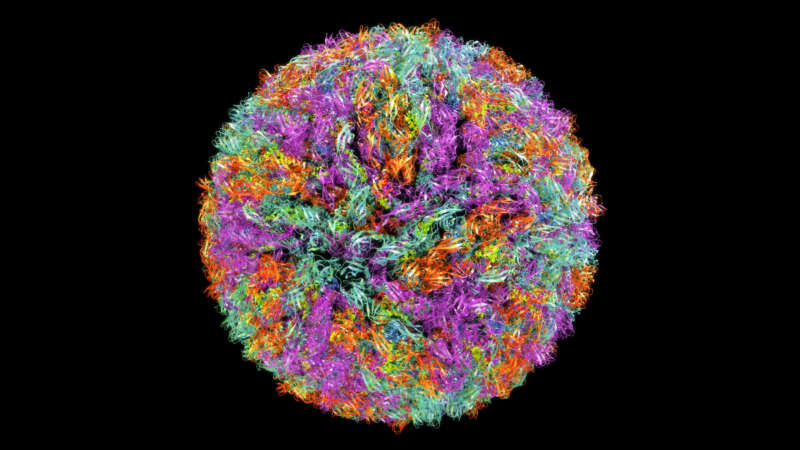
Mosquito-borne Diseases & the Environment
Climate change and human activity are enabling the spread of mosquito-borne diseases, like dengue fever, to new places. Stanford infectious disease experts and disease ecologists discuss what we know and how communities can protect themselves from these changing disease threats.
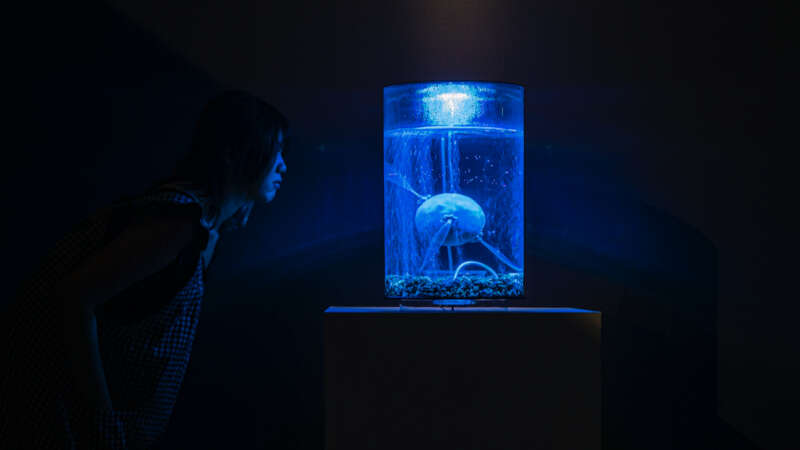
Anna Dumitriu: Exploring the Intersection of Art, Science, & Technology
British artist Anna Dumitriu’s name is synonymous with the world of BioArt. Not only is her work visually stunning, but it is also intellectually stimulating, as she tackles some of the most pressing issues of our time.
Dumitriu’s art explores our relationship to infectious diseases, artificial intelligence, and the impact of the pandemic from cultural and scientific perspectives. During her exploration of these topics, she has worked with the Liu Laboratory for Synthetic Evolution at the University of California in Irvine to investigate synthetic biology, and she has collaborated with BeyondSequ at the University of Birmingham to visually observe her CRISPR edit using super-resolution laser microscopy.